(1).png)


The 2026 Cybersecurity Roadmap: What Every CEO Needs to Know
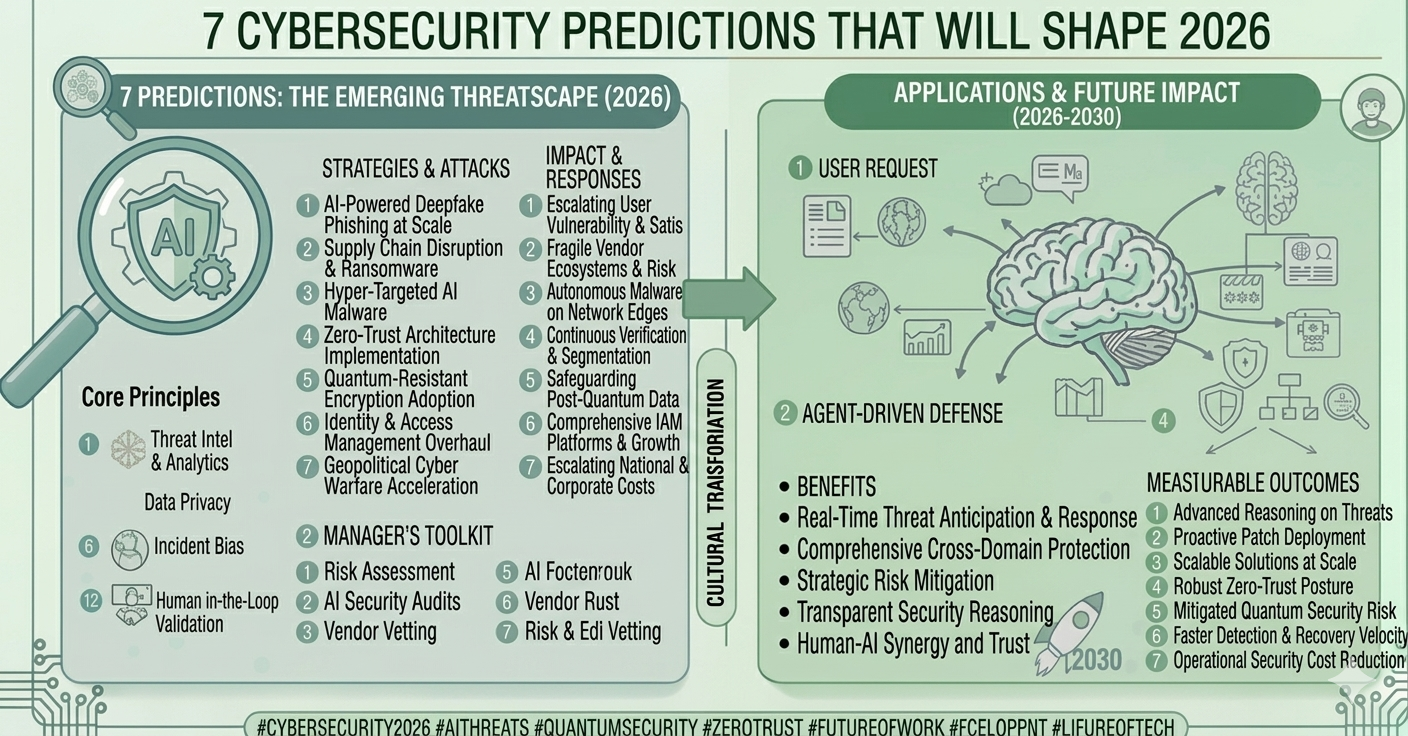
In the first quarter of 2026, we have witnessed a structural shift in the digital landscape. AI is no longer just a buzzword in security brochures; it is the primary engine for both cyber-offense and defense. For CEOs, the challenge has evolved: you are no longer just protecting data, you are governing a complex ecosystem of human employees and autonomous AI agents.
If your current strategy still relies on annual audits and reactive patching, your organization is at risk. Here is your strategic roadmap for navigating the "Year of Agentic Threats."
1. Shift from Reactive to Predictive Defense
In 2026, the speed of an attack is measured in milliseconds, not hours. Traditional "detect and respond" models are failing because AI-driven malware can now adapt its tactics in real-time to bypass static defenses.
The CEO Priority: Direct your CISO to transition toward Predictive AI-driven SOCs (Security Operations Centers). These systems use global telemetry to remediate vulnerabilities before they are publicly exploited.
The Metric to Watch: Move your focus from "Mean Time to Detect" (MTTD) to "Proactive Remediation Rate."
2. Managing the "Agentic AI" Governance Gap
The biggest trend of 2026 is the rise of Agentic AI—autonomous systems that have the authority to execute tasks, move data, and make decisions without human intervention. While these boost productivity, they also create "unmanaged identities."
The Risk: An unsecured AI agent can be manipulated to leak IP or provide unauthorized access to your core ERP.
The Roadmap Action: Implement an AI Governance Framework. Treat your AI agents like employees: they need clear permissions, "least-privileged access," and continuous behavioral monitoring.
3. Supply Chain Resilience is Your New Perimeter
In 2026, attackers have figured out that your "back door" is your vendor list. Quadrupling in frequency since 2024, supply chain compromises now represent the most significant systemic risk to enterprise continuity.
Beyond Compliance: "Meeting requirements" is no longer enough.
The Roadmap Action: Move toward Continuous Vendor Monitoring. Use automated platforms to track the security posture of your Tier-1 suppliers in real-time, rather than relying on a once-a-year SOC 2 report.
4. Preparing for the "Quantum Horizon"
While a "cryptographical collapse" isn't here yet, 2026 is the year Post-Quantum Cryptography (PQC) must move onto your formal roadmap. State actors are already practicing "Harvest Now, Decrypt Later" (HNDL) tactics.
The Roadmap Action: Conduct a Cryptographic Inventory. Identify which of your long-term sensitive data (customer records, trade secrets) is vulnerable to future quantum decryption and begin the transition to quantum-resistant standards.
5. Security as a Growth Enabler
In a market defined by AI-driven volatility, Trust is your most valuable product. Leading CEOs in 2026 are using their high security maturity as a competitive advantage to win enterprise contracts.
The Mindset Shift: Cybersecurity isn't a cost center; it's a resilience KPI.
The Roadmap Action: Ensure your Board of Directors treats cyber-resilience as a business-critical metric, equal to EBITDA or Customer Acquisition Cost (CAC).
CEO Checklist: Immediate Steps for Q2 2026
Run a "Cyber-Enabled Fraud" Review: This is now the #1 concern for executives. Map out how deepfakes and AI-driven phishing could target your finance and HR teams.
Audit Your AI Inventory: Know every "Agentic AI" tool currently running in your departments.
Test for Resilience, Not Just Compliance: Conduct a "Live Simulation" that includes your top 3 SaaS vendors. If they go down, can you still operate?